

When Siblings Clash - Part Two
You're not a referee. You're a resource.

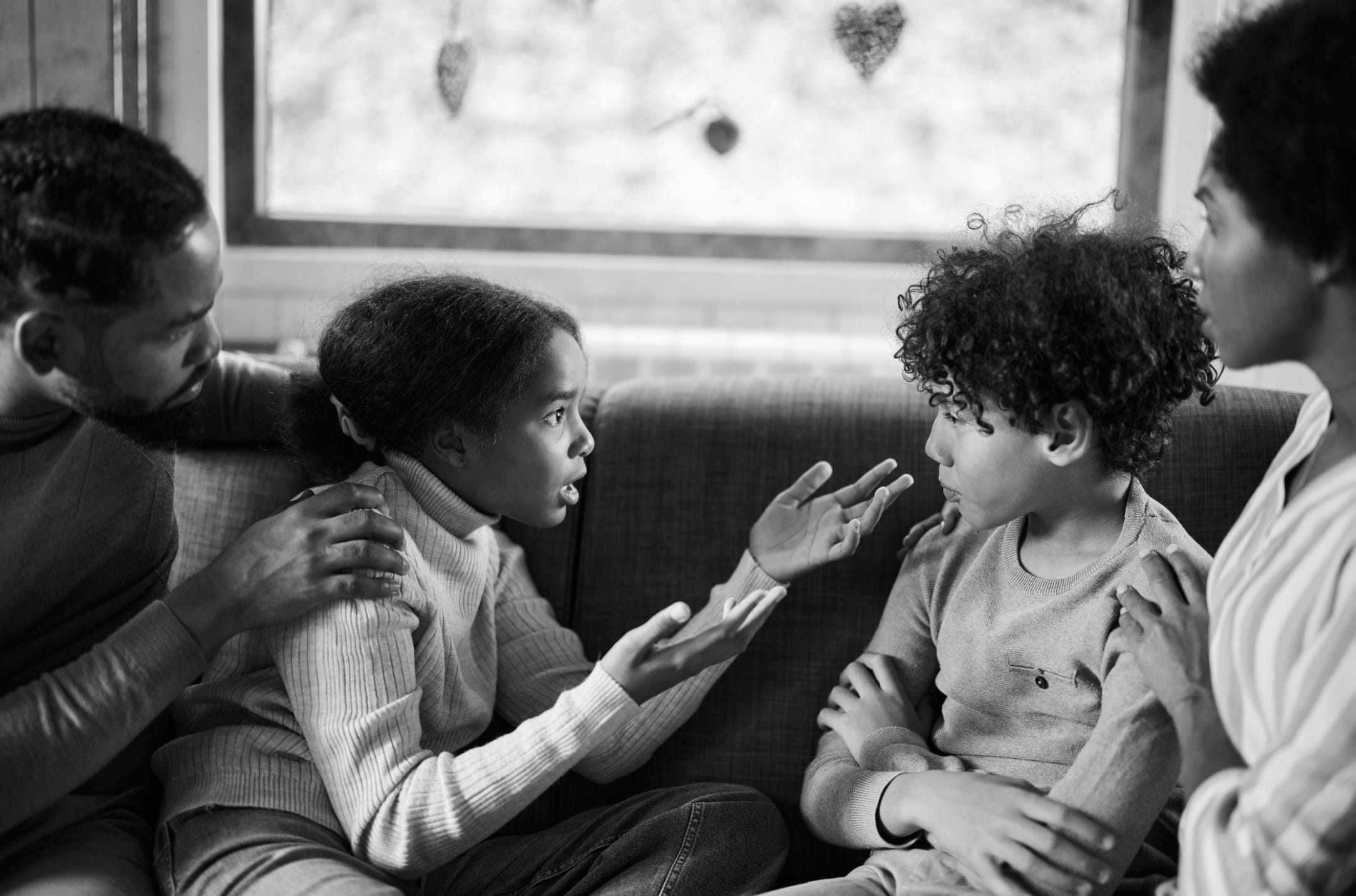
Welcome back to our conversation about sibling conflict. I’m hoping that you’ve had a chance to read Part One and to give some thought to the assumptions that that post challenged. How did that go for you? I hope you’re leaving your thoughts and questions in the comments on that post - I look forward to reading them!
In the first half, I proposed two shifts in how we think about and respond to conflict between children: Assumptions and Curiosity. We’ve said a lot about assumptions, and now we move forward into curiosity, and how to implement that in moments of tension.
When children are in conflict, we tend to go to judgment, fact-finding, or “fixing”, often quickly and with unfortunate reactivity. What I’m suggesting, by way of a lens shift, is training ourselves to seek out curiosity as our first stop. Before judgment, before finding out “who did what to whom”, before jumping in to “do something” and end the conflict. What do I mean by curiosity? I mean a broad, wide-open, boundless, unbiased “what is really going on here?”—for both children—with the goal of understanding what each child’s contribution might be, as well as our own.
“What? If my kids are fighting in the living room and I’m making dinner in the kitchen, I don’t HAVE a contribution! It’s on them!”
Maybe.
Maybe not.
Maybe we need a bit of clarification about that word “contribution.” It doesn’t mean that you’re responsible for the fact that they’re fighting. And it doesn’t mean that it’s your fault, either directly or indirectly. It’s simply that all dynamics within a family are complex, children’s behavior is sometimes not what it seems to be, and understanding the subtle ways in which we might be “contributing” to—not causing—what’s going on is a valuable part of that curiosity I spoke about. It could be part of “what’s really going on here” and it might be a part that we can actually control or change, so that’s an important piece of information.
So, let’s say you are making dinner and you hear your kids fighting in the living room. What might be your contribution? Oh, there are so many possibilities—none of them definitive, but all have potential!
